2022 - 2023
(Summary)
Dtravel Direct is a decentralized home-sharing platform where hosts and guests transact peer-to-peer — with lower fees, crypto payments, and community governance. I joined as product designer during the early build phase, responsible for translating a bold Web3 vision into a booking experience that mainstream users could actually use, while still delivering the ownership experience that Web3-native hosts were looking for.

Dtravel
Global
DTravel explores how decentralized technology and incentive design can transform peer-to-peer travel marketplaces, shifting control and value from platforms back to users.
(Problem Framing)
Two audiences. One product. Very different expectations.
Dtravel was trying to serve two distinct user groups at the same time:
Mainstream hosts & guests — people who understood Airbnb, not blockchain. For them, anything Web3-specific was friction, not a feature
True Believer hosts — Web3 enthusiasts who wanted real ownership, DAO governance, and crypto payments. For them, a watered-down experience would be a betrayal of the platform's promise
Most decentralized platforms at the time solved this by defaulting to one audience and ignoring the other. Dtravel needed a design approach that worked for both — without making either group feel like an afterthought.
Additional pressure: Dtravel was competing directly with Airbnb and Booking.com for the same properties and bookings. Trust had to be established from scratch against established household names.
(Role & Team)
What I owned
I was the product designer responsible for the guest and host-facing product — working alongside a product manager, engineering team, and Dtravel's founding team. My scope included:
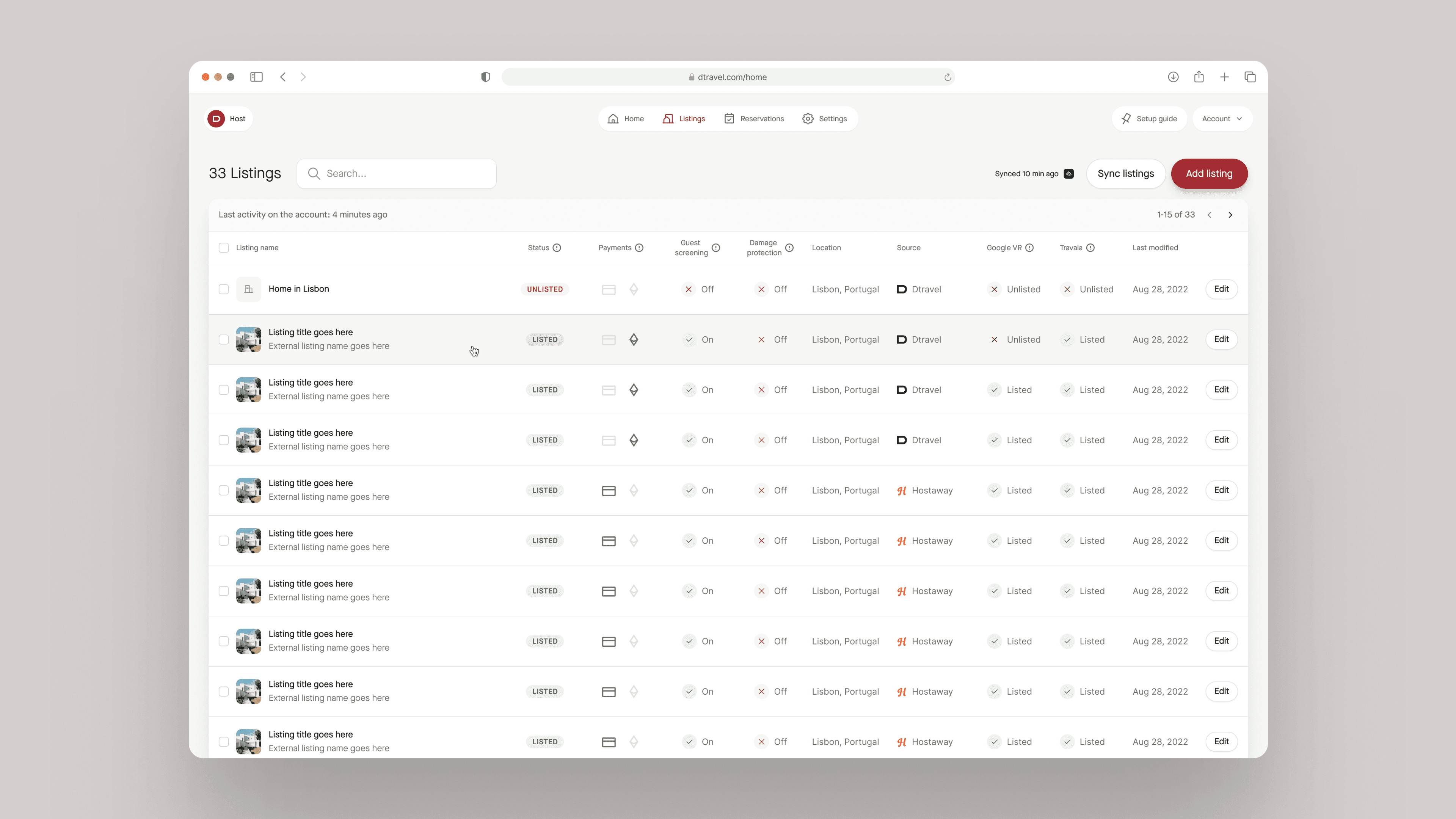
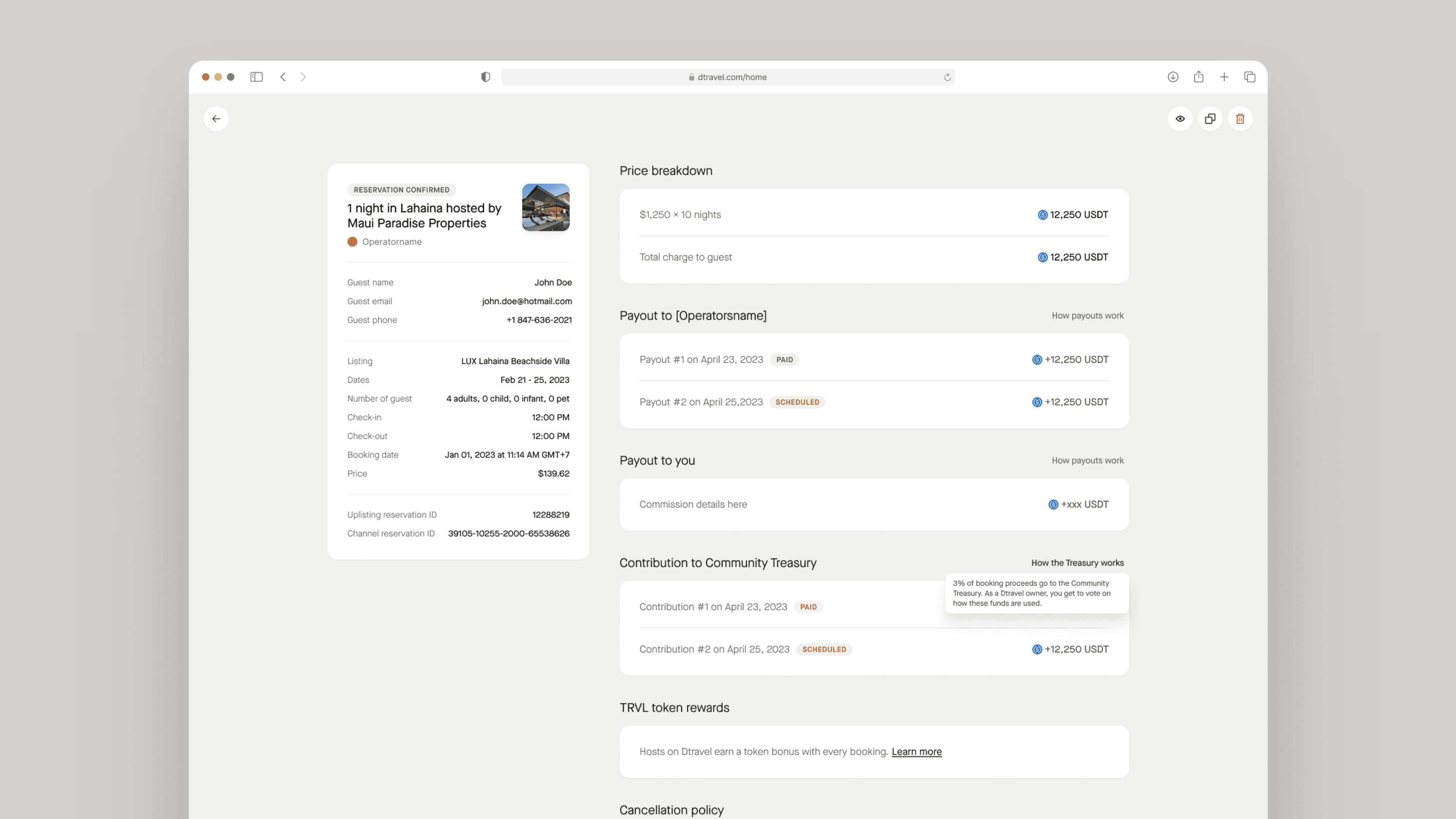
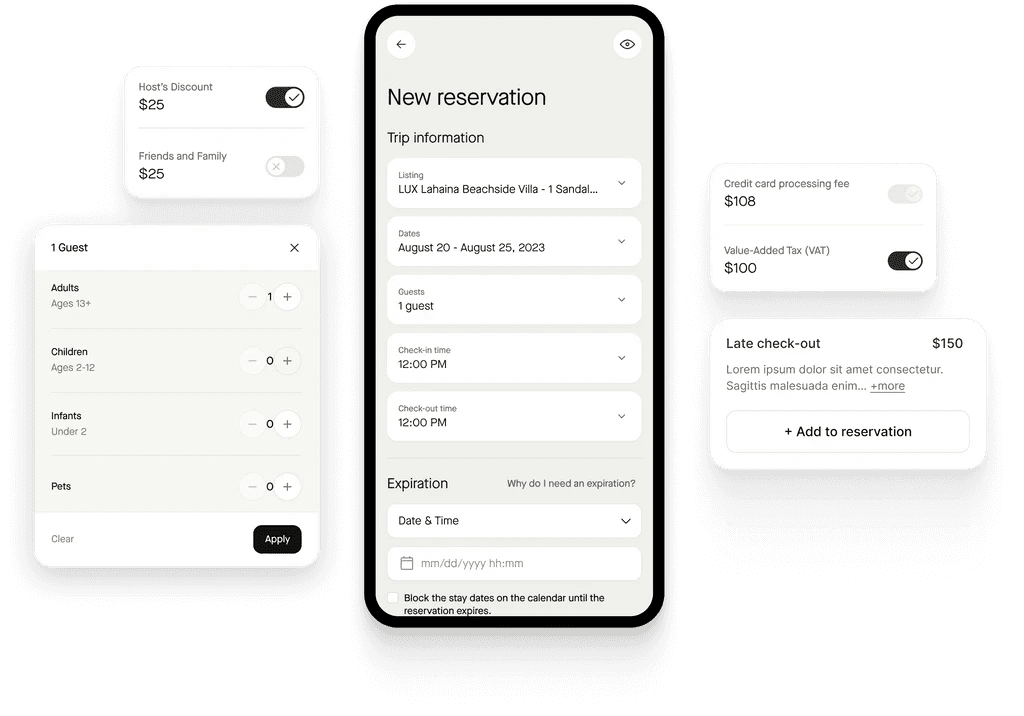
Host onboarding and listing creation flow
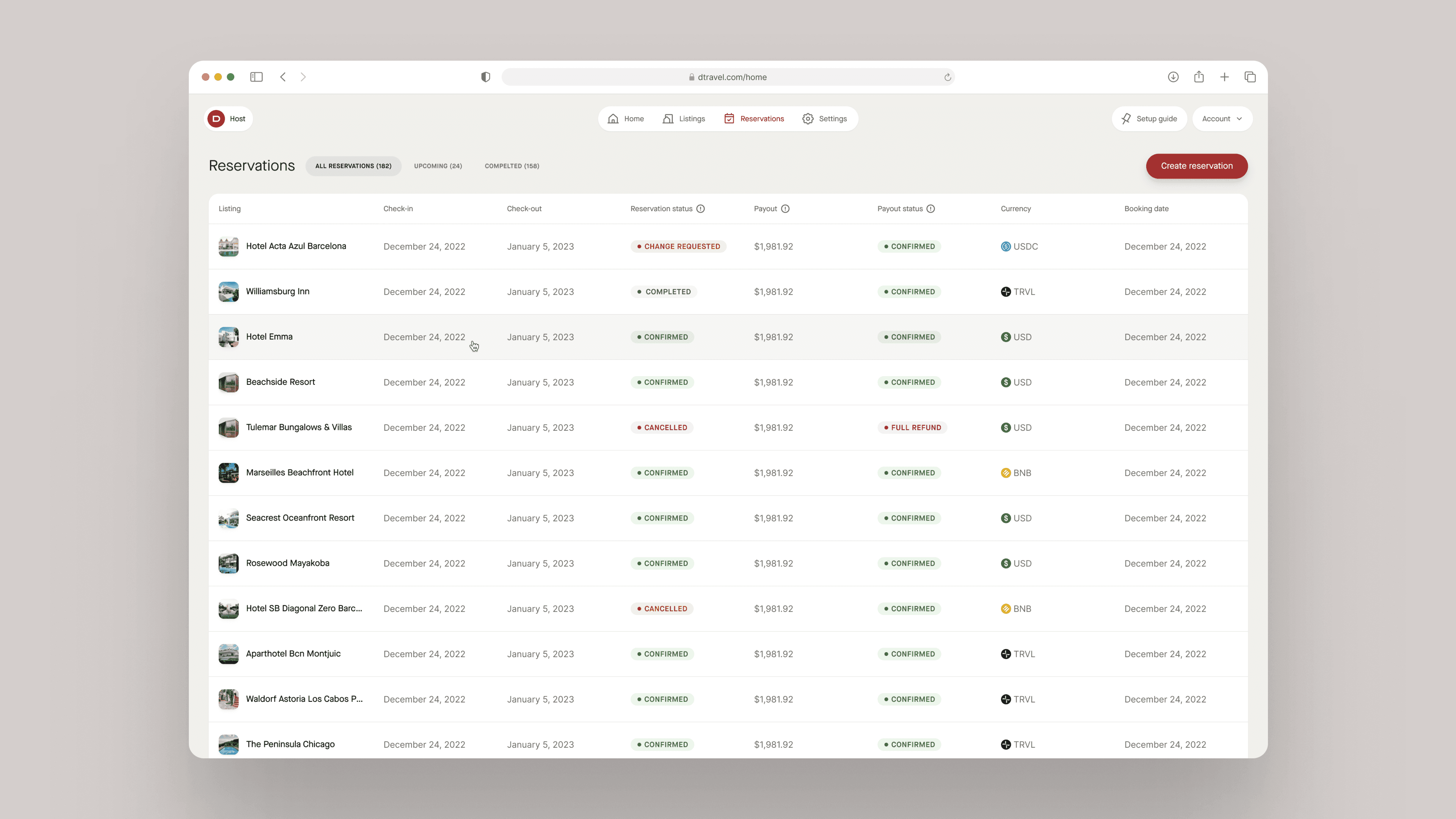
Booking and payment flows (fiat + crypto)
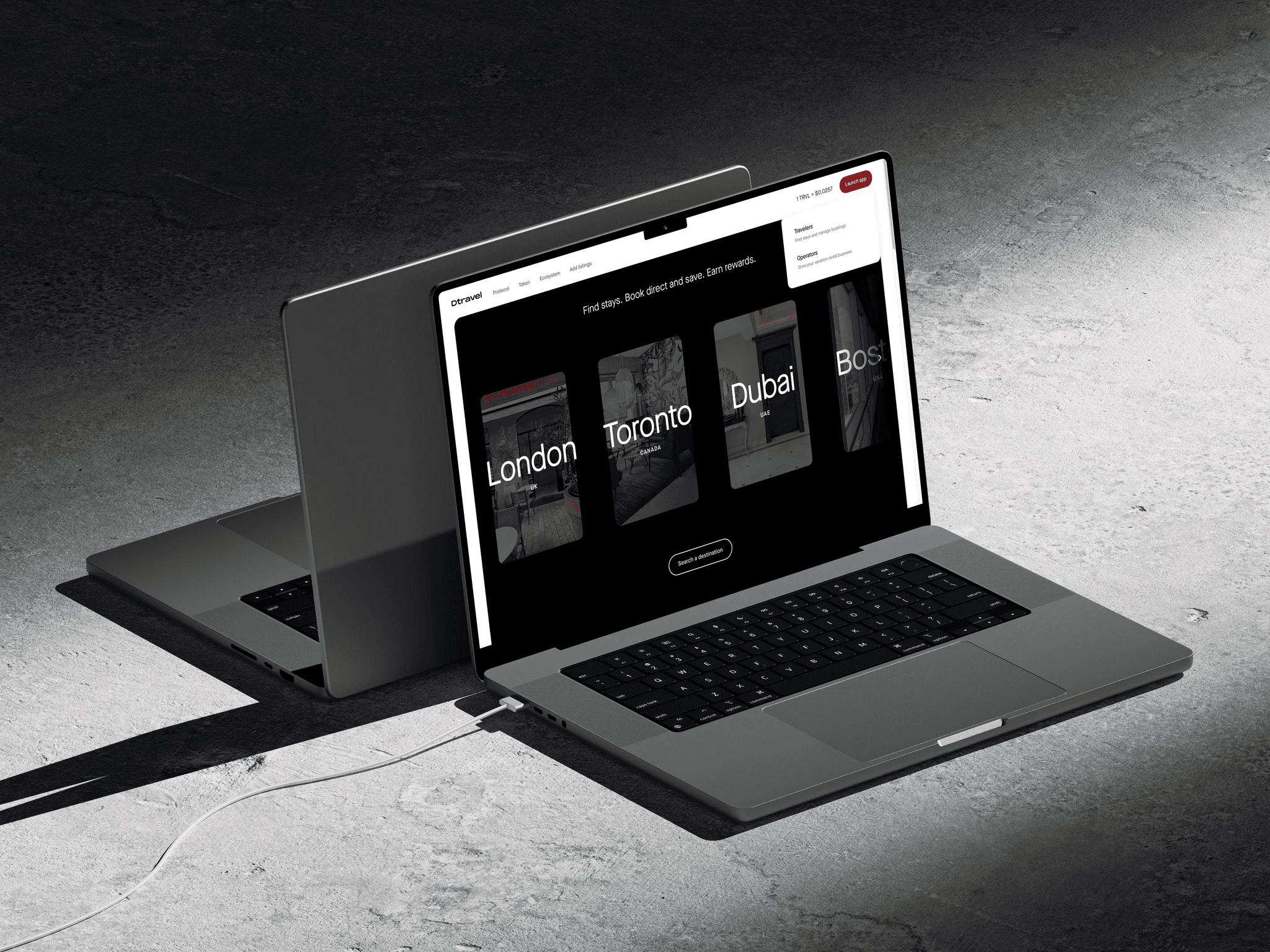
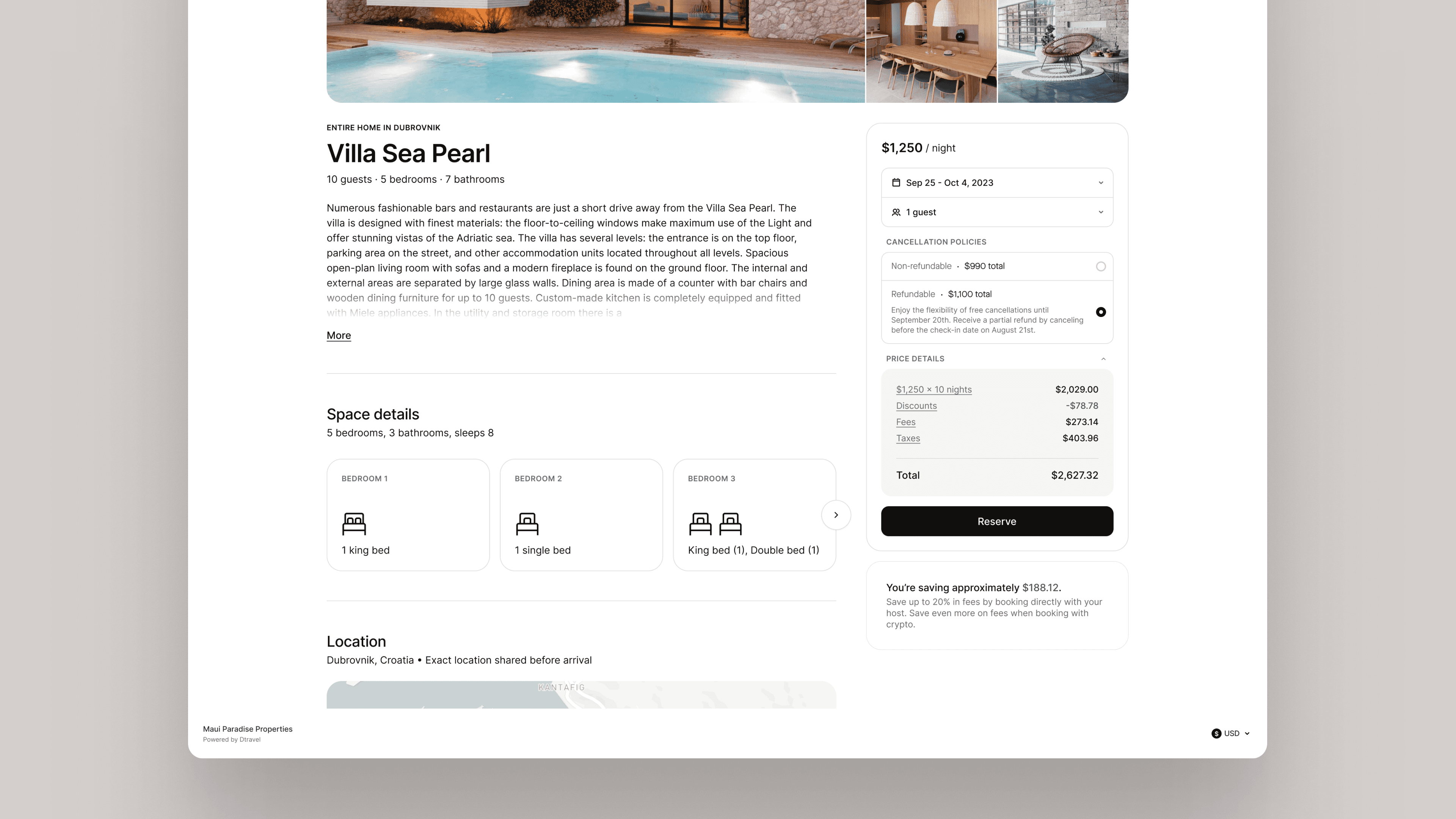
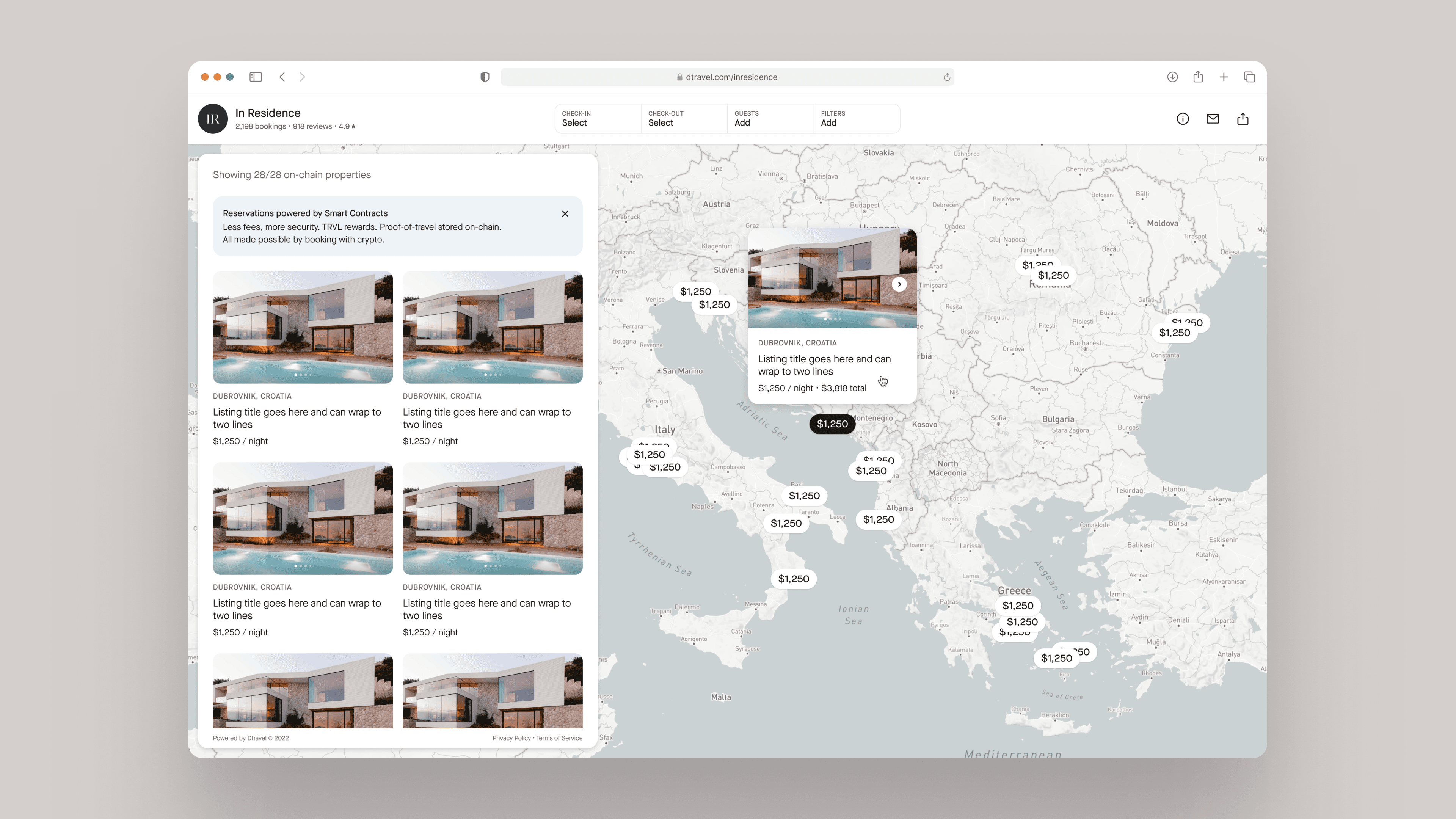
Guest discovery and property page experience
DAO governance entry points for engaged hosts
Trust and safety UI patterns throughout
(Approach)
Familiar first. Web3 second.
The core strategic decision was to lead with a familiar booking experience and layer Web3 elements in contextually — only surfacing decentralized features to users who were ready for them.
This meant resisting the temptation to lead with blockchain terminology on the booking flow. A guest booking a property doesn't need to know about DAOs to complete a reservation. But a host who's been on the platform for 30 days and is earning TRVL tokens? They should have a clear, well-designed path into governance participation.
I grounded every design decision in the research persona established by the Host Research project — constantly asking: would a True Believer host find this empowering? Would a mainstream Airbnb host find this confusing?
(Challenges)
Making trust legible without a brand name to lean on
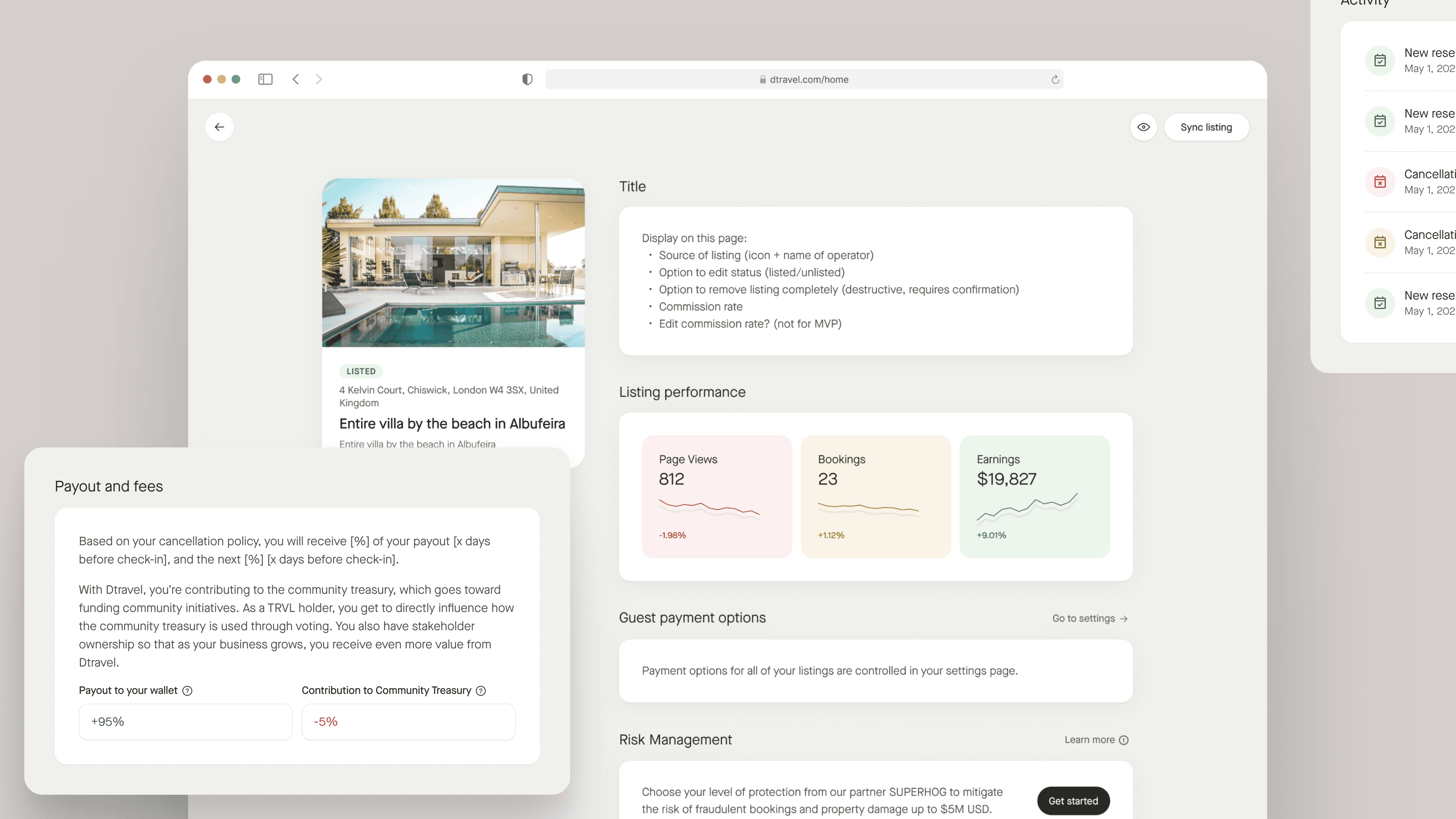
Airbnb has 15 years of brand trust. Dtravel had none. Every UI decision had to work harder to establish credibility — from property photos to fee transparency to cancellation policies.
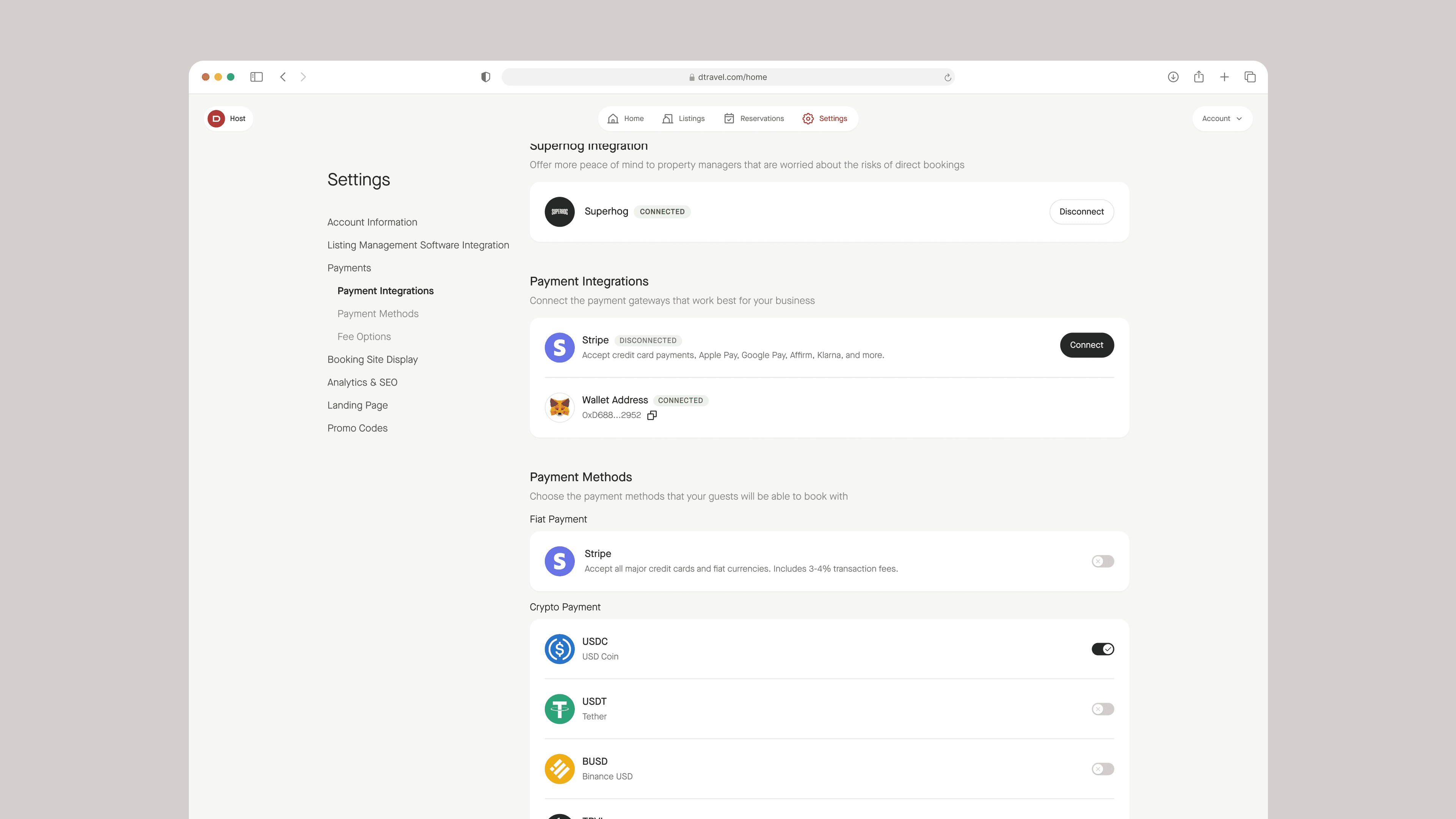
The second challenge was payment flexibility. Supporting both fiat and crypto in the same checkout flow sounds simple in theory. In practice, it meant designing a flow that didn't make either option feel like a second-class alternative — and handling the dramatically different failure states, confirmation times, and user mental models of each.
The third challenge was governance UX. DAO participation tools often feel like admin dashboards — dry, transactional, hard to connect to the 'ownership' feeling they're supposed to deliver. Making governance feel meaningful and accessible without simplifying it into meaninglessness required multiple iterations.
(Solutions)
Progressive Web3 — meet users where they are, bring them further
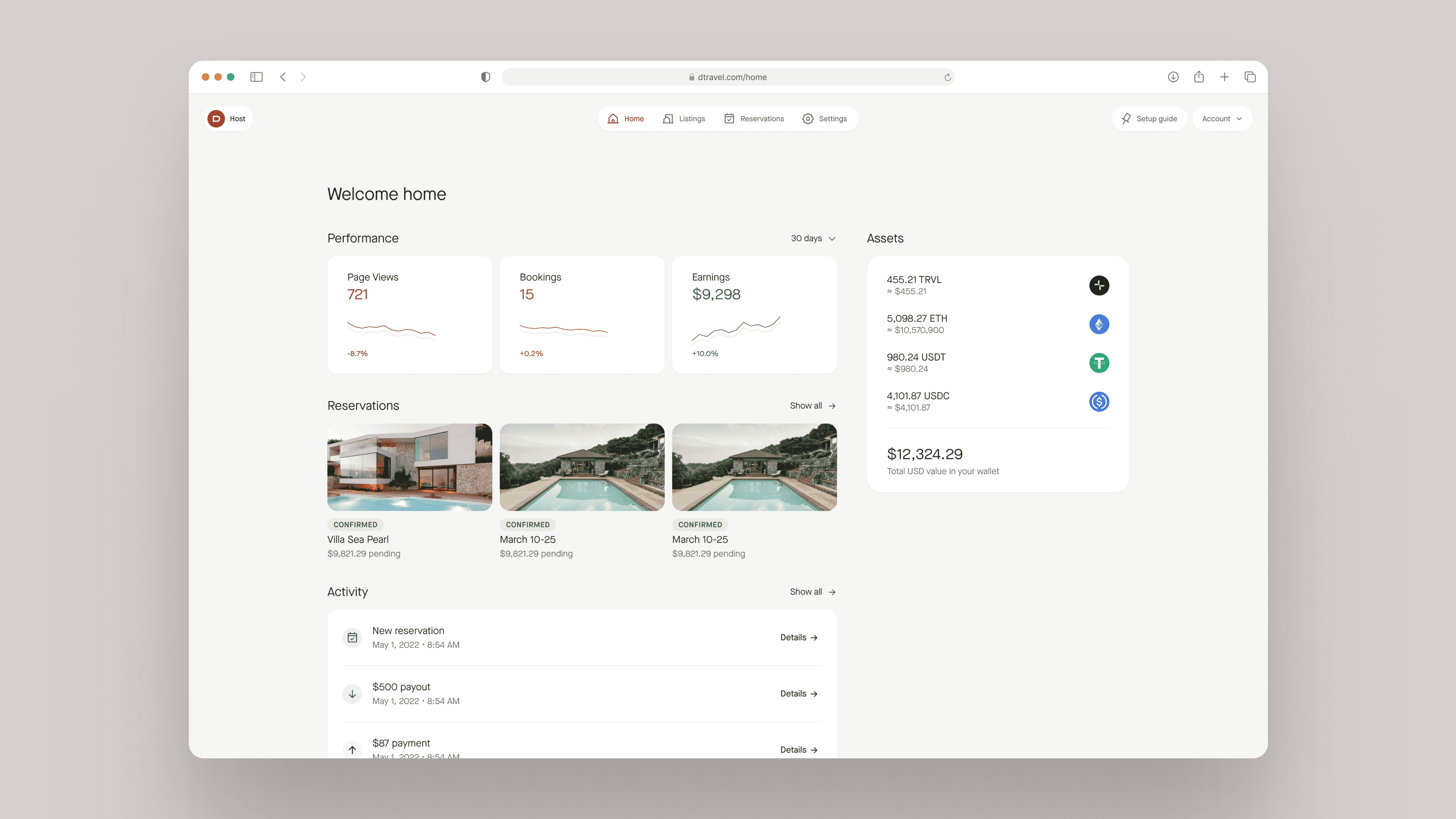
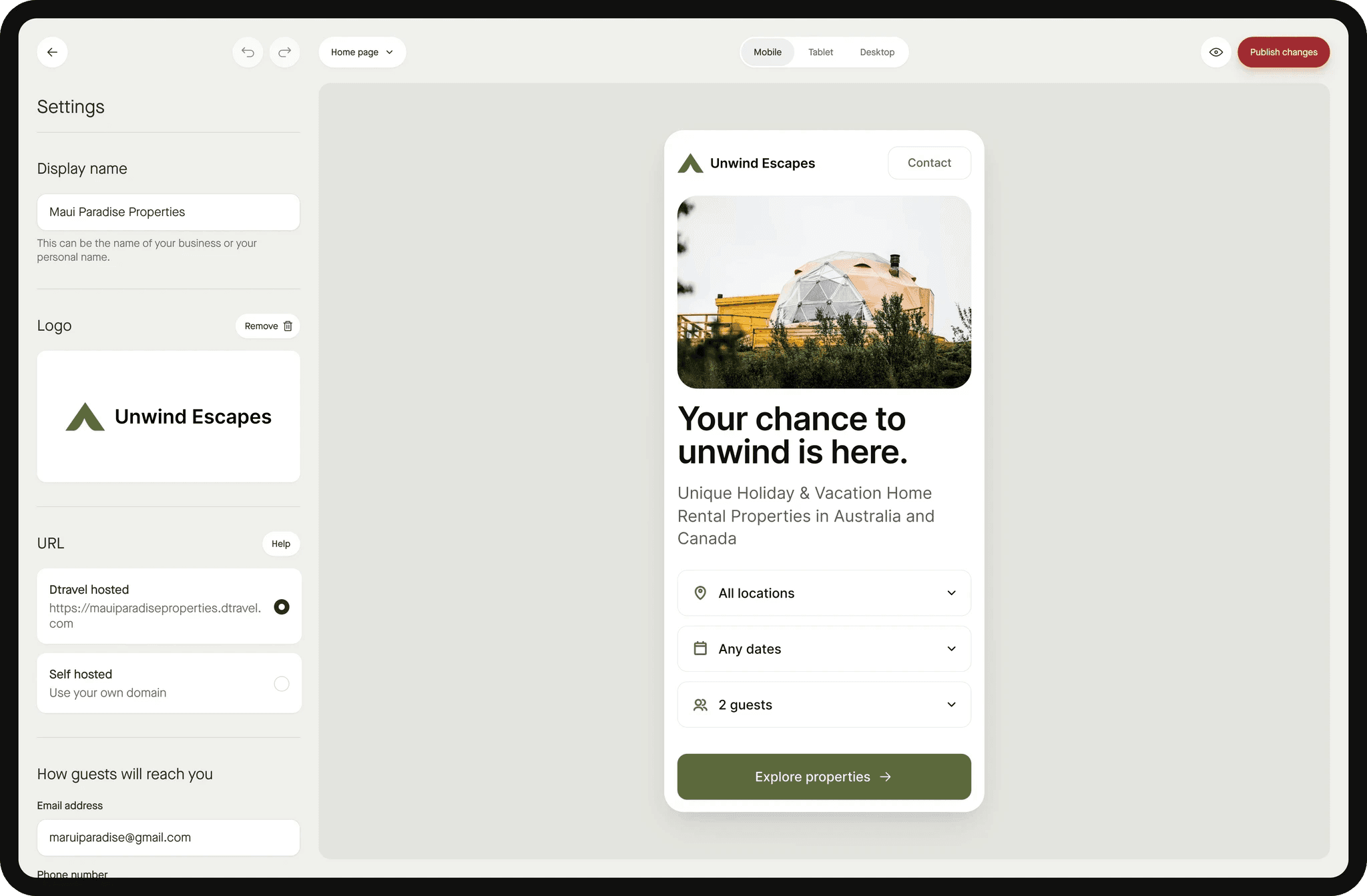
Simplified listing flow: Hosts could publish a property without ever touching crypto concepts. Token rewards and governance access were introduced progressively, post-onboarding, once trust was established
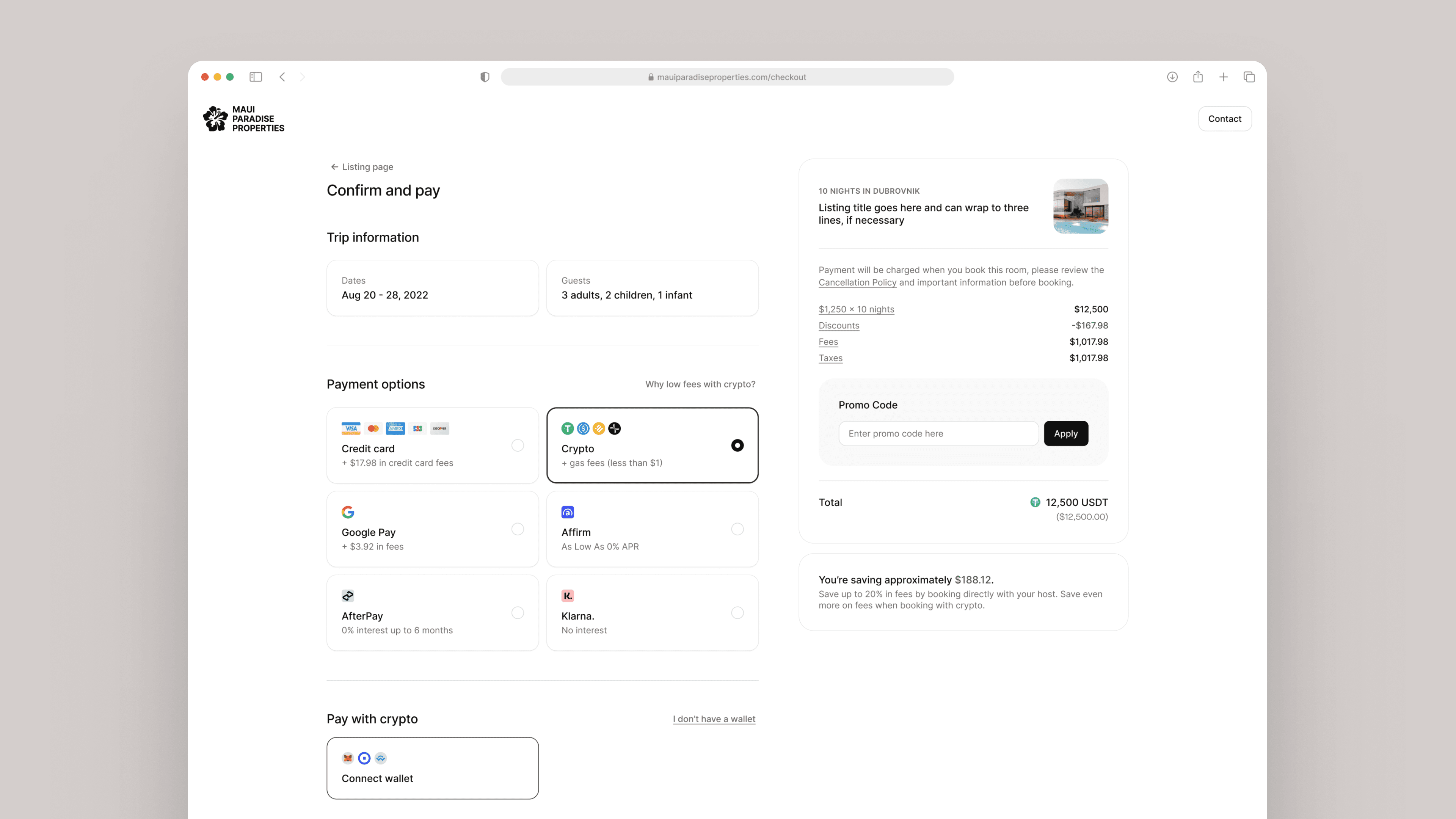
Dual-path checkout: Fiat and crypto were presented as equal choices at payment — neither hidden, neither over-explained. Crypto confirmation handled with clear status feedback and realistic time expectations
Governance entry points: For hosts who opted in, I designed a dedicated governance section — voting interface, proposal browsing, treasury transparency — accessible from the host dashboard, not buried in settings
Trust signals throughout: Verified host badges, transparent fee breakdowns, clear cancellation policies, and consistent visual language borrowed from the most trusted elements of mainstream booking platforms — then made distinctly Dtravel
(Results & Impact)
✅ The progressive onboarding approach allowed mainstream hosts to get live without any Web3 knowledge — reducing the conceptual barrier to entry
✅ Dual-path payment design supported both fiat and crypto without either group experiencing friction or confusion
✅ Governance features were adopted by the True Believer host segment — the users the research had identified as Dtravel's core community builders
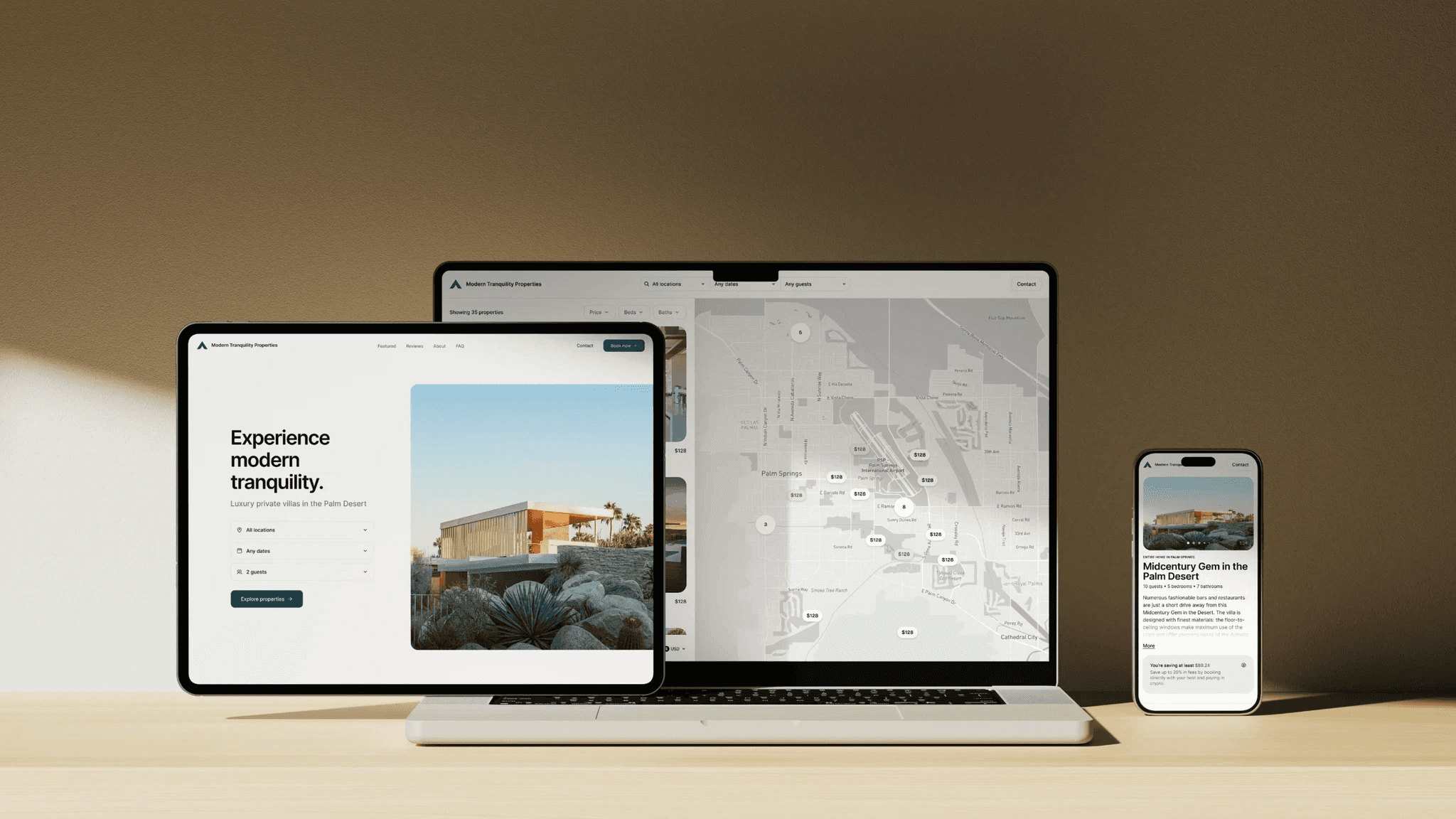
✅ Trust UI patterns established a visual language that distinguished Dtravel from generic Web3 projects while remaining accessible to mainstream users
(Next Step)
The next design challenge was scaling the governance experience — as more hosts joined and the DAO treasury grew, the voting interface needed to handle more complex proposals and longer-term community decision-making. The foundation was designed to scale; the work was making governance feel as intuitive as booking.