December 2022 – December 2025
(Summary)
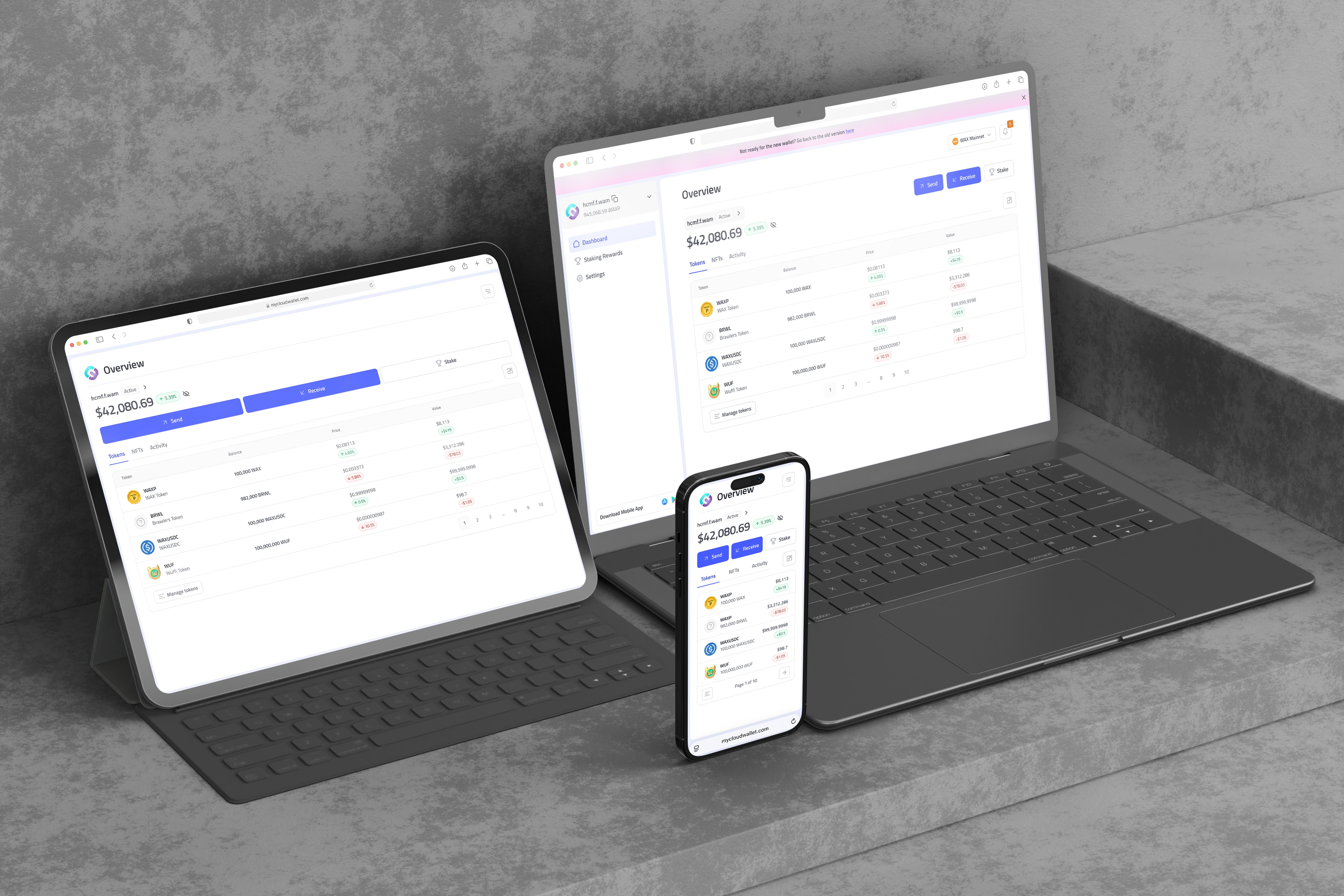
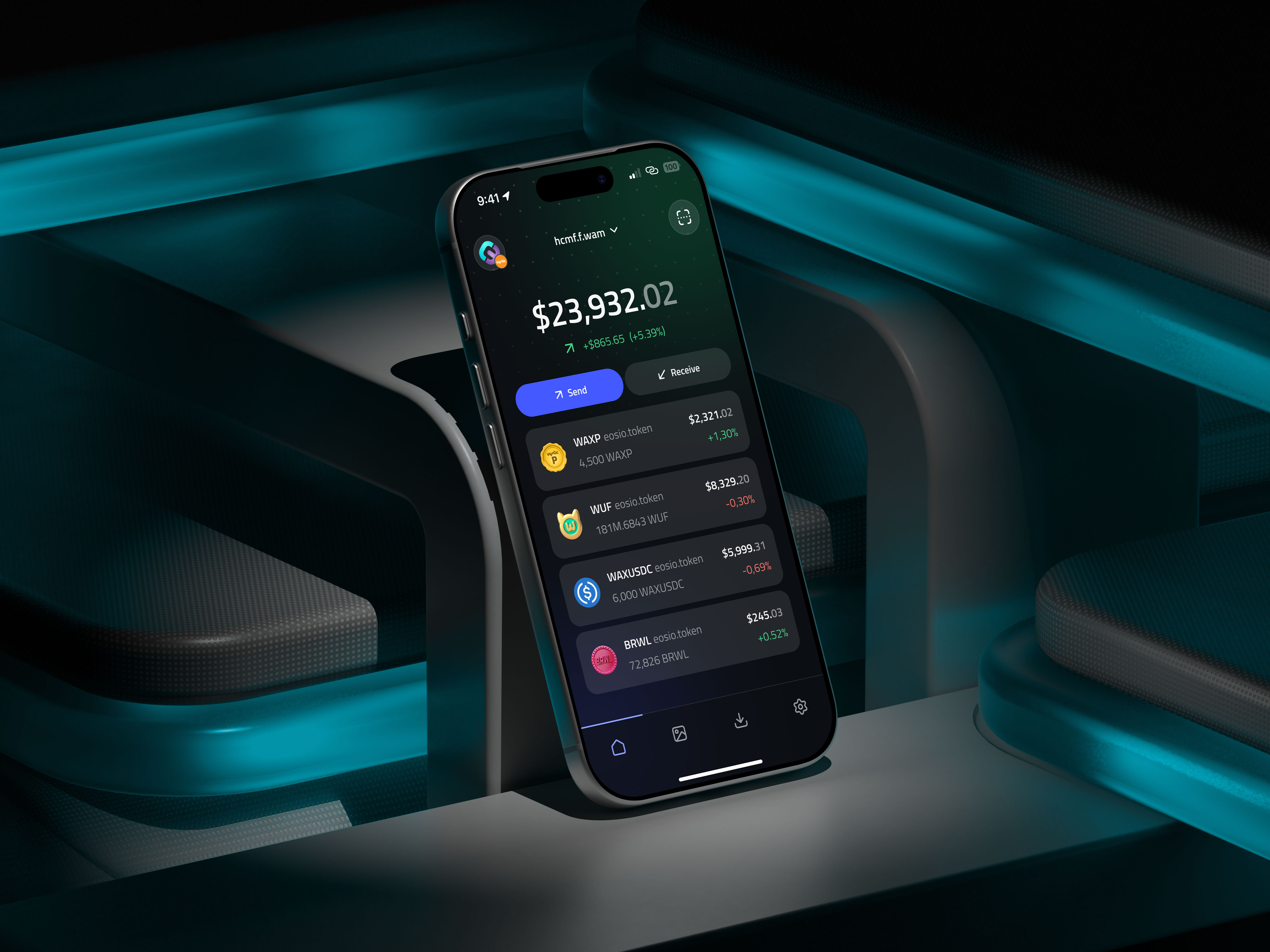
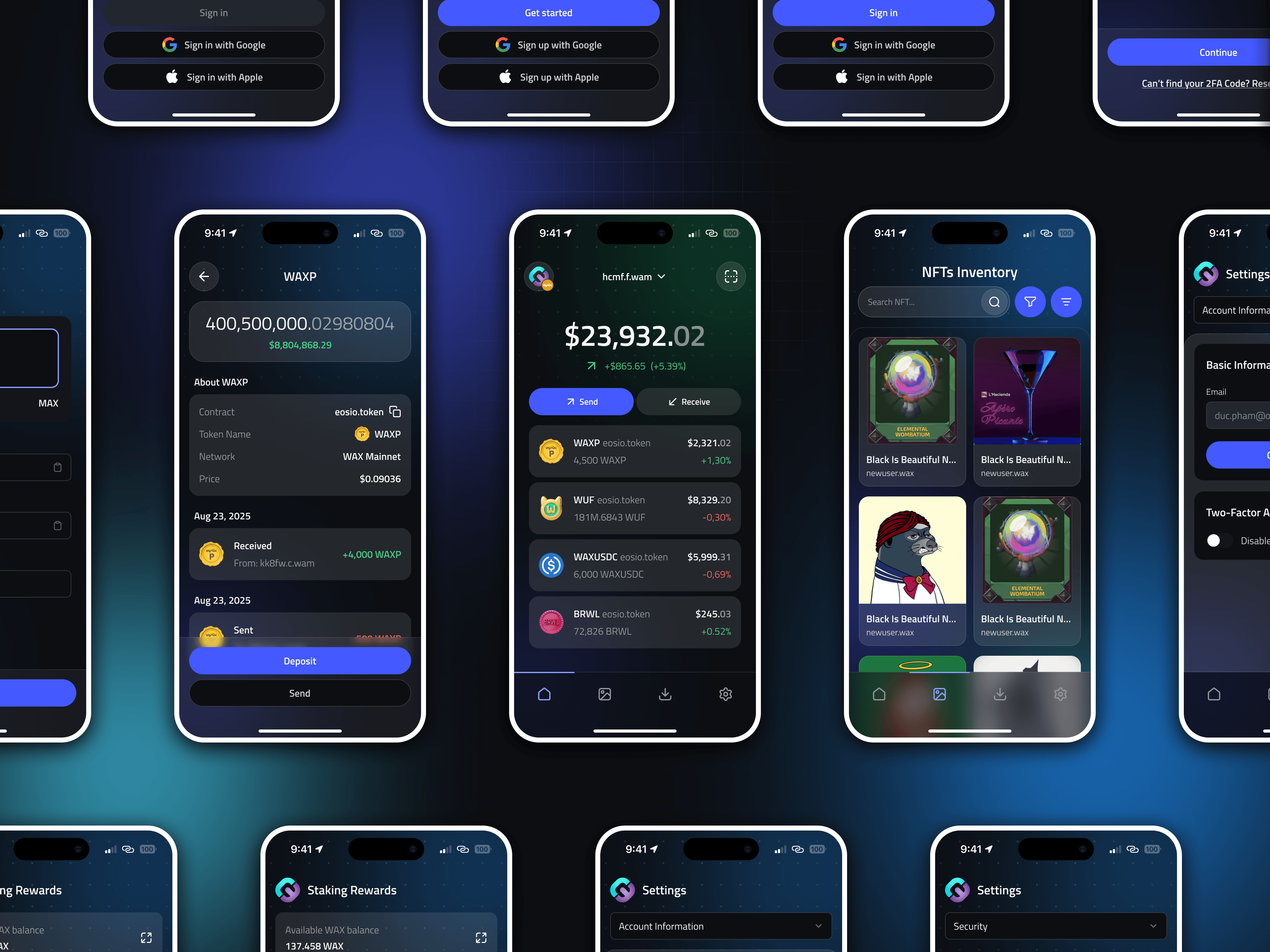
MyCloudWallet is the core entry point into the WAX blockchain ecosystem. I owned the end-to-end design of a cross-platform crypto wallet — from onboarding and authentication to asset management, wallet migration, and on-chain resource control. The challenge: make irreversible blockchain actions feel safe for users who range from crypto-native power users to complete beginners.

World Asset eXchange (WAX)
New York, USA
World Asset eXchange (WAX) is a blockchain-based company focused on building a scalable ecosystem for digital asset management.
The platform provides infrastructure and products that enable users to interact with blockchain assets securely and efficiently, with MyCloudWallet serving as a core entry point into the WAX ecosystem.
(Problem Framing)
What was broken — and why it mattered
Blockchain wallets are uniquely high-stakes: most actions are irreversible. A wrong tap on a staking decision, a misunderstood migration flow, or a confused mnemonic backup isn't just a bad experience — it's a permanent loss of funds. The original MyCloudWallet experience wasn't designed around this reality. Key problems identified:
Users couldn't distinguish between Mainnet and Testnet environments, leading to confusion and test transactions on live accounts
Wallet migration (soft-claim vs hard-claim) had no clear explanation of consequences — users were making permanent decisions without understanding what they were choosing
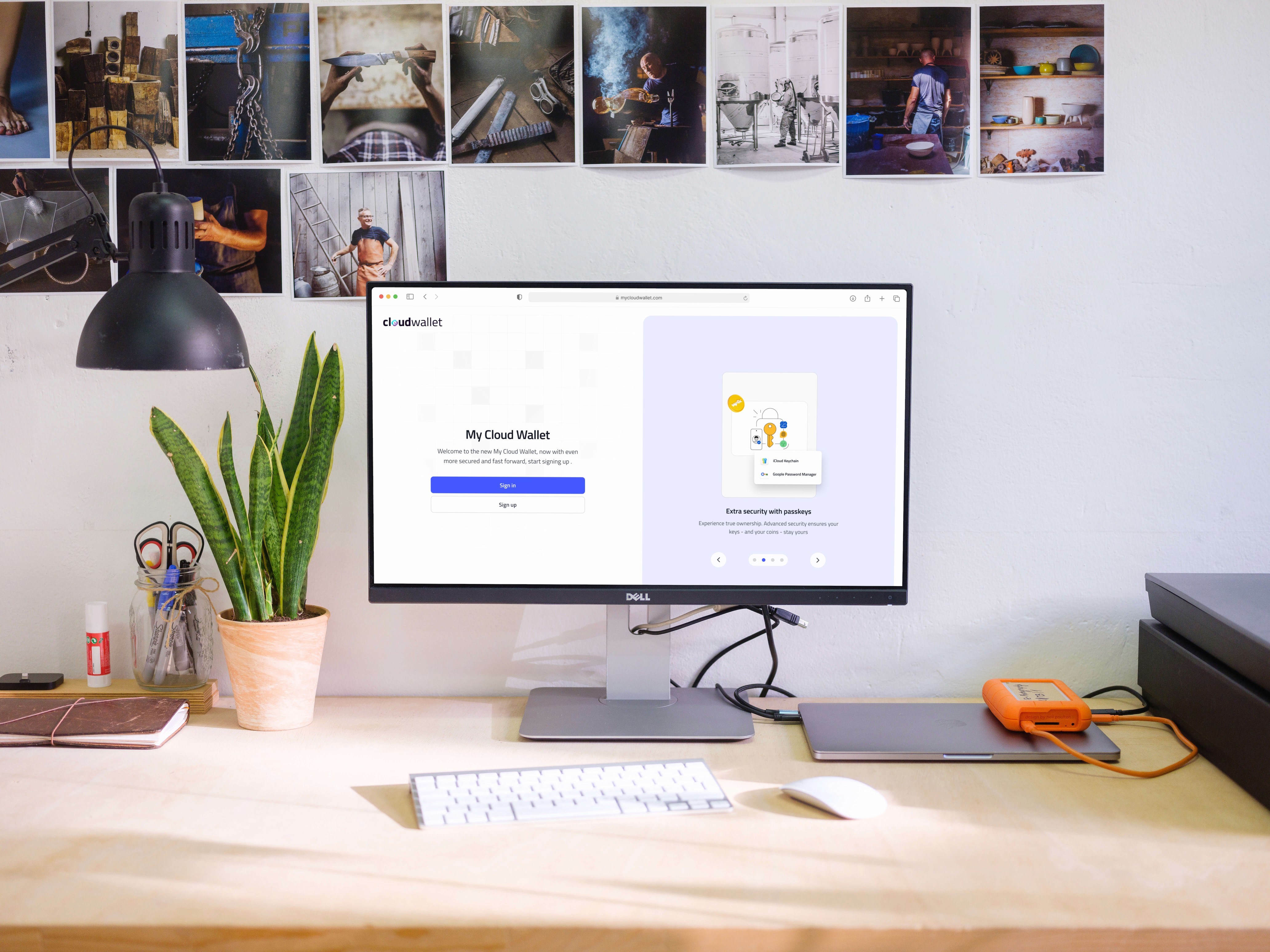
Passkey and mnemonic phrase flows were treated as interchangeable, but carry completely different ownership and recovery implications
CPU, NET, and RAM resource management — core to WAX transaction performance — was surfaced as raw technical data, with no connection to what it meant for the user
(Role & Team)
What I owned
I was the sole product designer on MyCloudWallet, working directly with a cross-functional team of engineers, a product manager, and WAX's leadership team in New York. My scope covered:
Product discovery and problem framing — defining what to solve before designing anything
End-to-end UX across all core flows: onboarding, authentication, asset dashboard, staking, migration, and resource management
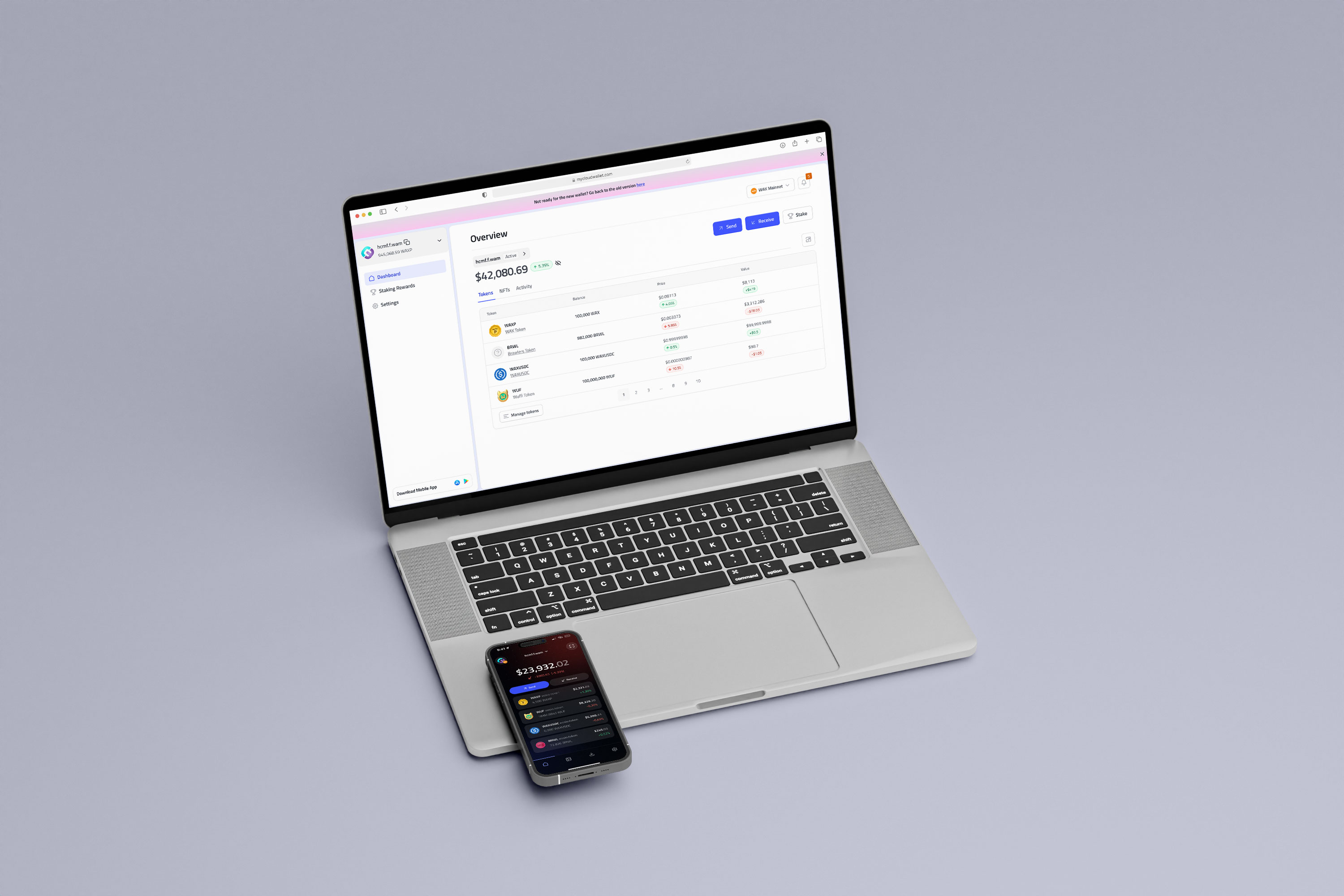
Design system alignment across web and mobile — maintaining shared mental models while adapting to platform-specific interaction patterns
Design handoff and ongoing collaboration with engineering — including reviewing implementation and iterating post-launch
(Approach)
Strategy: Trust-first, system-aware design
My core design strategy was progressive disclosure — surface just enough information for users to act confidently at each step, and let them access deeper technical detail only when they choose to. This meant:
Mapping every flow to its risk level — high-risk actions (migration, key management) got explicit confirmation steps and plain-language warnings; low-risk actions (checking balance, viewing history) stayed frictionless
Building a shared language between web and mobile — the same mental models, just adapted for screen size and usage context (quick checks on mobile, deeper control on web)
Research: I conducted usability testing across both platforms with users at different blockchain literacy levels — from WAX veterans to first-time crypto users — to validate that the experience worked across the full spectrum
(Challenges)
What made this hard
The hardest design challenge was the migration flow. Soft-claim and hard-claim are technical concepts with no real-world analogy — users had to choose between them without a clear framework. Every iteration I tried initially failed the 'what happens if I get this wrong?' question.
The second major challenge was the tension between security and convenience. Passkey authentication felt magical but hid the ownership implications. Mnemonic phrases were secure but terrifying to new users. Finding a design that honored both — without defaulting to either extreme — required multiple rounds of testing and refinement.
(Solutions)
A wallet that earns trust at every step
The final solution was a trust-first, system-aware experience built around three principles:
Contextual clarity — complex concepts like Mainnet/Testnet, migration types, and resource staking were explained at the exact moment users needed them, not buried in a help center
Explicit confirmation for high-risk actions — every irreversible action required users to actively confirm they understood the consequence, using plain language that passed a readability test with non-technical users
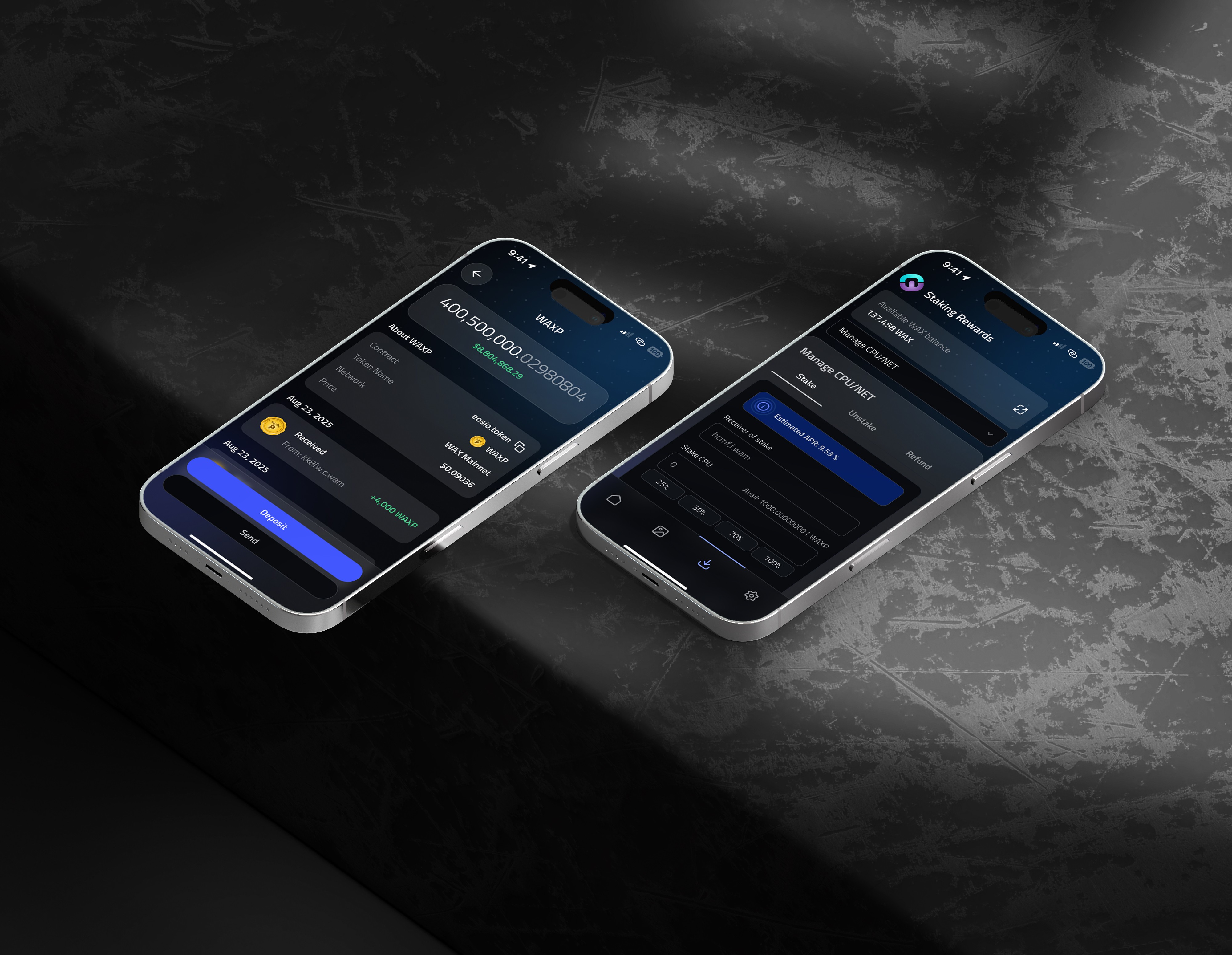
Platform-appropriate depth — mobile focused on quick status checks and lightweight actions; web supported full configuration and deeper control. Same mental model, different interaction depth
CPU, NET, and RAM were redesigned from raw numbers into a visual system that connected each resource to its real impact — transaction speed, cost, and earning potential — turning abstract mechanics into something users could actually reason about.
(Results & Impact)
Outcomes
✅ Wallet migration flows validated through usability testing — users completed hard-claim and soft-claim migrations without support intervention
✅ Onboarding abandonment reduced at the passkey/mnemonic decision point — the redesigned flow clearly communicated ownership implications without adding friction
✅ Cross-platform design consistency shortened engineering back-and-forth during handoff — fewer revision cycles between design and implementation
✅ Resource management UI simplified to the point where non-technical users could understand their staking status without referencing documentation
(Next Step)
With the core wallet experience stable, the natural next frontier is expanding MyCloudWallet beyond WAX — supporting multi-chain asset management while maintaining the same trust-first design principles that made the WAX experience work. The design system I built is architected to scale to additional blockchains without rebuilding from scratch.